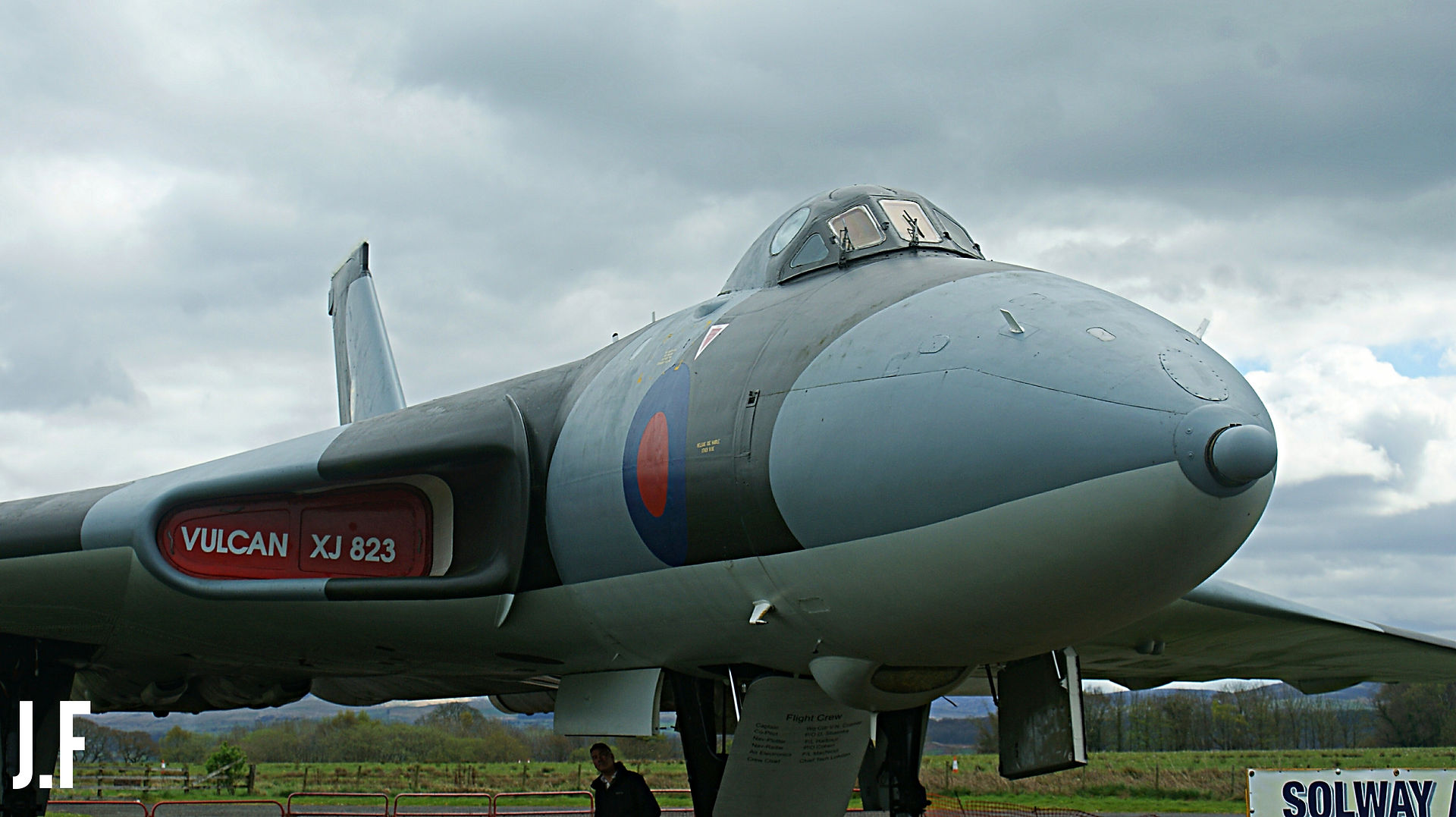
When work began on the building of the prototypes of the 698, Avro first decided to build two smaller prototypes to gain experience of delta wing designs- A one-third scale model called the 707 and a one-half scale model called the 710. The 710 was however cancelled due to time and cost constraints, and Avro instead opted to adapt the 707 design (redesignated the 707A) so they could test both low and high speed handling characteristics. After some delays in the aircrafts development, the first 698 prototype ‘VX770’ finally took to the skies on the 30th August, 1952. The aircraft was first unveiled to the public the following month at the Farnborough air show. Soon after this the aircraft was renamed by the Air Council as the Vulcan, after the Roman god of fire and destruction.
The closest the world came to a potential nuclear war was during the Cuban Missile Crisis when, in October 1962, a standoff between the United States and the Soviet Union over Soviet nuclear ballistic missiles being positioned in Cuba almost lead the two states to a conflict where nuclear war would almost certainly have ensued. During this time, RAF Vulcans were ordered to a high state of readiness in the event that they were required to carry out pre-emptive strikes on the USSR. As an ally of the United States and a member of NATO, Britain would be duty bound to take necessary action if called upon, but thankfully an agreement was reached and the conflict ended 13 days later. Once the situation was diffused the Vulcans were stood down but continued to operate their 24-7-365 Quick Reaction Alert function.
A plan was conceived to prepare three aging Vulcans (the other two V bombers at this point had already retired from bombing duties) along with no less than fourteen Victor tankers, at short notice and fly them down to the British owned Ascension Island in the Mid Atlantic. The aircraft needed some modifications, like the addition of refuelling probes so they could receive fuel mid-flight in order to make the trip down to Ascension. After some quick testing and a handful of familiarisation and training flights, the aircraft set off for the Island on 28th April 1982. Once the bombers arrived at Wideawake Airfield on Ascension Island, they began to plan for an immediate mission. Two Vulcans would set off along with eleven Victors and would perform a complex series of refuelling that would enable a single Vulcan to fly the 3,400 nautical miles to the Falkland Islands where it would bomb the runway at Port Stanley and then return to Ascension, rendezvousing with more tankers on the way back. One of the Vulcans and two Victors that took off for the mission would act as reserves in case other aircraft developed problems, and would return once the first air to air refuelling stage was complete. The other Victors would refuel each other, as well as topping up the Vulcan a total of seven times on its way to the Falklands.
The three Vulcans deployed to Wideawake were XM597, XM598 and XM607, and the mission codenamed ‘Operation Black Buck’ was to take place on the 30th April- 1st May. On the evening of April 30th, Vulcan XM598 took off from Wideawake as the lead aircraft for the mission, with XM607 joining her as the reserve aircraft along with their eleven Victor tankers. Shortly after taking off, 598 developed a pressurisation failure and was forced to return to base, leaving Vulcan 607 to take up the reigns to execute the mission. Captained by Flight Lieutenant Martin Withers, XM607 proceeded all the way down to the Falklands, and against all odds managed to evade Argentinian radar long enough to drop its payload of twenty one 10,000 lb bombs over the airfield at 4 am on May 1st. One of the bombs scored a direct hit in the centre of the runway which was enough to render the airfield unusable by the Argentine Air Force and help the British forces gain a foothold on the Island, eventually leading the surrender of the Argentine forces on the 14th June.
Vulcan XM607 successfully returned to base after their sixteen hour mission and several similar missions subsequently followed, targeting Stanley’s runway again, as well as anti-aircraft radar installations and airport stores and aircraft that were sat at Stanley, unable to be used due to the damage to the runway. The Black Buck mission also broke the record for the longest single bombing sortie in history. Although these missions were carried out in the twilight of the Vulcans career, they still managed to succeed and prove their value against much more modern systems, striking targets well beyond their intended range. Amazingly, some Vulcans served with the RAF with the Vulcan Display Flight until 1993, when the final Vulcan XH558 was finally retired from service.
XH558
After her retirement, XH558 was sold to David Walton who kept her in good condition at Bruntingthorpe airfield until 1999 when a company called the Vulcan To The Sky Trust began pursuing her with the intention of returning her to flight. With help from public donations and the Heritage Lottery Fund, VTTS were finally able to start the restoration process in 2005 and XH558 was formally handed over to them from the Walton family. 558 took to the sky for the first time in over 15 years on the 18th October 2007 and after gaining certification to fly public performances at airshows, flew her first display in her reincarnated form on the 5th July 2008 at the Waddington International Airshow.
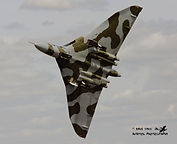
After significant further funding, mainly from the British public, Vulcan XH558 finally succumbed to her age and it was deemed unfeasible to continue to keep her in an airworthy condition. She finally retired at the end of the 2015 airshow season after 8 successful years on the airshow circuit. One of the most popular attractions at any event she attended, 558 was widely considered to have a major impact on airshows during her display life, reportedly being the sole reason for several events selling out over her 8 year tenure in the skies over Britain. The aircraft that captured the hearts and minds of multiple generations is still widely revered to this day. From her near 90 degrees of banking in her displays, to her iconic howl when power was applied to her four huge Olympus engines, to showing off her cavernous bomb bay, the Vulcan will always be known as the last British heavy bomber, and one of the greatest feats of British engineering that has ever been produced.
As great a bomber as the Vulcan was, it was also considered for a number of other roles too. In 1951 Avro proposed to build a military transport variant of the Vulcan that would be known as the Avro 718. A year later Avro also proposed a plan for its model 722, a civilian airliner based on the Vulcan that it would call the Avro Atlantic. Neither of these projects came to fruition however. In 1956 Avro proposed an idea for its model 732, an eight engined supersonic development of the Vulcan, and in 1960 the Vulcan Phase 6 (or B.3 as it would have been known) was considered which would have featured larger wings and fuselage, space for a second crew, and more fuel and ordnance storage for longer range missions, but again these variants were never produced. In the early 1980s, Argentina expressed interested in buying a number of Vulcans from the UK. Although the British government didn’t flat out refuse the request initially, they did wonder if the interest in the aircraft was genuine and in January 1982, the Ministry of Defence decided against the sale of Vulcans to Argentina, stating that the Vulcan would be ‘entirely suitable for an attack on the Falklands’. Ironically, Argentina invaded the Falklands less than three months later.
It’s amazing to think that the Vulcan which still looks modern by today’s standards first flew just eleven years after its predecessor, the Avro Lancaster! Although we are not likely to see it on our skies ever again, the amount it contributed to British Aviation history is undeniable. The aircraft that the Americans used to call the ‘Aluminum Overcast’ will always hold a special place in many people’s hearts as the plane that protected us during some of the most volatile tensions in human history, an icon of British engineering, and probably the biggest flying triangle ever to inspire a generation! Many people will miss seeing the Vulcan in our skies, but as the Vulcan To The Sky airshow commentator Sean Maffet said during XH558s last display year; “Don’t cry because it’s over, smile because it happened”.

This one was taken by Chris Booth.
As the Vulcans design continued to be refined, the first 10 B.2s produced featured elements of B.1s that would later be enhanced. This included narrower air intakes and the absence of tail warning radar equipment in the tail cone. The 11th production aircraft ‘XH557’ was given deeper air intakes due to the expectation of bigger engines as the aircraft was further developed, and this airframe along with most of the other early B.2s were retained by Avro for ongoing testing and trials, and so the 12th B.2 to be produced, the now famous Vulcan ‘XH558’, was the first aircraft to be delivered to the RAF in July of 1960. The final Vulcan B.2 would be delivered in 1965, with the last of the B.1 variants being withdrawn from service by 1968.
Issue 3
The Avro Vulcan
This Article was written by Dave Sims, Head writer for Low Flying Aircraft
Few British aircraft have captured the hearts and the imaginations of the public like the Avro Vulcan. This most iconic example of British ingenuity and engineering excellence was produced during the golden period of the 50’s when Britain was considered the top aircraft manufacturer in the world. The design of the delta winged bomber began in the shadow of the Second World War, when the race to develop the first atomic weapons thrust the world into the beginning of the Cold War. The first mention of a requirement for a new jet bomber came in January 1947, when the British Air Ministry set out specifications of an operational requirement for a medium range bomber that could carry 20,000 lbs conventional ordnance and would also have the ability to alternately carry a single 10,000 lb atomic munition.
Avro, one of six companies who began working on an aircraft that could fulfil these specifications, got to work immediately on the design of the size and shape of the aircraft- designating the project the Avro 698. After deciding that conventional aircraft designs could not deliver what was required, the design team began researching German swept wing designs from the war. They came to the conclusion that a swept wing of more than 45 degrees would provide adequate opportunity to support an airframe that could fulfil the specifications, but would roughly double the target weight of the aircraft (the requirement specified a maximum weight for a fully loaded aircraft should not exceed 100,000 lbs). The team decided to try removing the tail section of the aircraft in their initial design, and filled in the gaps behind the wings to create a flying wing shape to which they added a vertical tail fin to the end of each wing. Avro found that by doing this, they could significantly reduce the overall weight of the aircraft while increasing lift due to the larger wing area. They then experimented with the placement of the engines and bomb bays, initially intending to place two sets of 2 turbojet engines either side of the fuselage stacked on top of each other, with a bomb bay fitted into each of the 698’s large wings.
As the design of the 698 progressed, Avro found that it would be necessary to reduce the thickness of the wings, which resulted in the engines being moved to a side by side configuration, and the two bomb bays being removed from the wings in favour of one large bay in the fuselage. The two vertical fins were also replaced by one larger tail fin at the aircrafts centreline, bringing the aircrafts weight closer to the centre of gravity and helping with stabilisation and control.
It would also need to be able to fly at altitudes between 35,000 and 50,000 feet and have a range of 1,500 nautical miles, with a cruising speed of around 500 knots.
The rise of a Legend
After the initial Vulcan prototype had proven the concept of Avro’s delta wing bomber design, further improvements were made to the aircraft to increase its effectiveness. Wing fuel tanks were quickly added to satisfy the range requirement of the aircrafts original specification, and its original Rolls- Royce Avon engines were replaced by more powerful Armstrong Siddeley Sapphire examples. These were shortly upgraded again to Bristol Olympus engines generating nearly 10,000 lbs of thrust each. The nose of the aircraft was lengthened and the control yoke was replaced with the now famous flight stick, which was unheard of for a large aircraft at the time. After some tweaks to the design of the aircrafts delta wing shape to aid with control issues and buffeting at high speed, Vulcan B.1 ‘XA889’ was delivered to the Aeroplane & Armament Experimental Establishment at Boscome Down for trials for its initial Certificate of Airworthiness in March 1956.
In May 1956, it was decided that Avro would begin to produce their Vulcans to B.2 specification. The B.2 variant was able to fly higher than the B.1, and would feature the newly developed phase 2C wing design as well as bigger Olympus 200 engines. Whilst having the ability to refuel in flight and being fitted with Electronic Counter Measure equipment, the newer B.2 Vulcans would be introduced from around the 45th aircraft delivered of the original 99 that were ordered. The first Vulcan B.1 was delivered to the RAF in September 1956, and although a proposal for upgrading existing B.1s to B.2 standard was considered, this was rejected due to cost restraints and the final B.1 was delivered in March 1959.

The production of two Avro 698 prototypes was authorised in January 1948, two months after Handley Page received its authorisation to produce a prototype of its HP.80 (which would become the Handley Page Victor). Three month later in April 1948, Vickers was also given the go ahead to produce a prototype of their Type 660 (which would later become known as the Vickers Valiant), which wasn’t able to comply with all of the BAM requirements specifications, but would be ready sooner than the other two offerings.
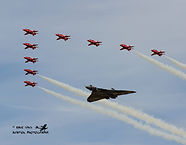
One of the most famous Vulcans, XH558 Taken by Andrew Miller
Vulcans took part in several multinational training exercises in the early 1960s, and proved their mettle against the US Air Force among others when they provided the role of Soviet bombers in mock attacks on American cities during several ‘Sky Shield’ training operations. The Vulcans proved not only to be effective bombers, but also rather stealthy thanks to their advanced ECM equipment and combined with their impressive manoeuvrability, were successfully able to complete a number of missions during these exercises over several attendances at the Sky Shield training operations. There was even one instance in 1961 where a Vulcan actually managed to approach and fly over New York City without being detected whilst acting the part of a Soviet bomber, landing safely at Plattsburgh Air Force Base! Even Vulcans that were detected during the missions managed more often than not to escape interception. These performances reportedly caused a lot of envy among the pilots of the Vulcans American counterpart, the B-52 Stratofortress.
Cold War Guardians
As the Vulcan came into service with the RAF, the need for an independent nuclear deterrent had never been so high, with tensions rising between NATO members and the Soviet Union throughout the 1950’s and 60’s. Along with Avro’s heavy bomber, two other aircraft had been brought into British service to compliment both the nuclear and conventional bombing capability- The Handley Page Victor and the Vickers Valiant. These three bombers became known as the V bomber force, the Vulcan and the Victor as primarily nuclear bombers, and the Valiant as a conventional bomber. The RAFs Bomber Command and the US Air Forces Strategic Air Command worked together to ensure major Soviet targets were constantly covered by a Quick Reaction Force from 1958 and by 1962, two aircraft from the V bomber force stationed at every major RAF base were on constant standby, armed with nuclear weapons.
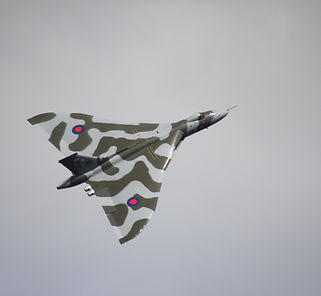
Also XH558, Taken by the wonderful Michelle Darlow.
The Vulcans role as a nuclear deterrent slowly became obsolete after the introduction of Polaris ICBM equipped submarines came into service with the Royal Navy from 1968. The Vulcans were originally intended to carry the American Skybolt air launched ballistic missile but after this was cancelled in 1962, the Vulcans continued to use the much maligned British Blue Steel missile instead. When Blue Steel was withdrawn form service in 1970, the Vulcan was largely resigned to the conventional bombing role, a function which it would not be called upon to use in anger until the very end of its career. It was still able to carry the WE.177B, a parachute slowed tactical nuclear warhead, but these were not deemed very effective and were kept in use as a last resort until the Blackburn Buccaneer became equipped with the WE.177C and took over the airborne nuclear deterrent role.
Vulcans also saw use as maritime reconnaissance, air sampling and air refuelling aircraft. Nine Vulcans were converted to B.2 (MRR) configuration for use with 27 Squadron who performed maritime reconnaissance and air sampling duties from late 1973, and continued this role until they were replaced by the Nimrod in 1982. After the Falklands War in 1982, the current air refuelling fleet of converted Victor tankers had been all but exhausted by the RAF due to the long range missions carried out during the conflict. As the RAF had yet to receive its new VC-10 and TriStar tankers, 6 Vulcans were converted to air tanker (K.2 standard) aircraft as temporary cover until the new tankers were available. These aircraft served from mid-1982 until March 1984 when they were relieved by TriStars of 216 Squadron.
Black Buck
On the 2nd April 1982 Argentina invaded the British owned Falkland Islands, claiming it had sovereignty over them. Britain immediately responded, dispatching a naval task force to the islands led by the British aircraft carriers HMS Hermes and HMS Invincible. After failed attempts to retake the island with land forces and with the British Naval forces tied up in skirmishes with the Argentinian Navy, it was established that it was vital to break the Argentines air superiority of the island that they had formed since taking control of Port Stanley Airport, the Islands only airfield.

Photo Credit : Axel Edwards

Fantastic image taken by Neil Atterbury/Four Elements Photography
The Vulcan crews trained for the Quick Reaction Alert role constantly, and were expected to be airborne in just 4 minutes from receiving an order to scramble in the event of an emergency. The idea behind this was that the Ministry of Defence estimated that 4 minutes may be all the notice they would have if the Soviet Union decided to launch an Intercontinental Ballistic Missile (ICBM) at the UK. The bombers would be expected to take off and fly East, hitting pre-determined strategic targets behind the Iron Curtain with their nuclear munitions, thus ensuring British retaliation even if the Soviet Union did strike first. It is thought by many that the constant threat of nuclear war from both sides kept either from wanting to strike first and the doctrine of ‘Mutually Assured Destruction’ was coined, emphasising neither sides willingness neither to attack first nor stand down in fear of what the other might do.
MORE PHOTOGRAPHS
(C) Chris Booth
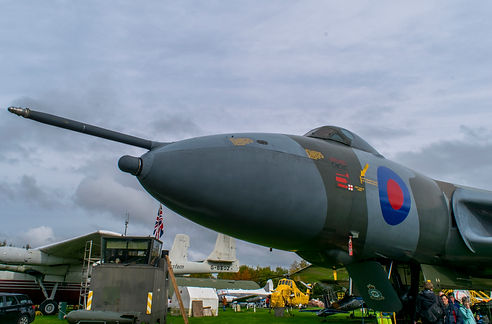

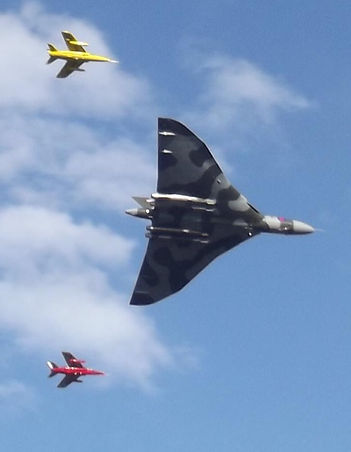

(C) David Pringle
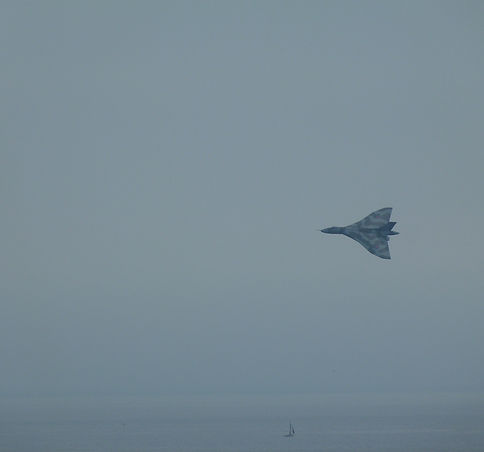
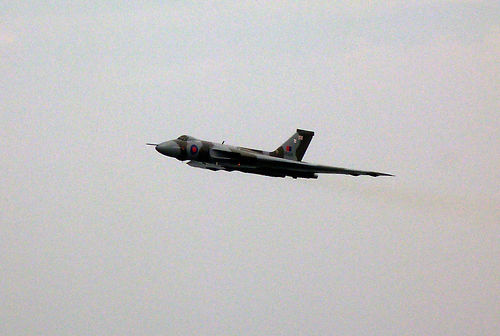
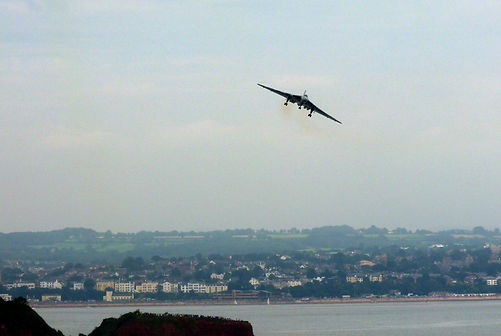
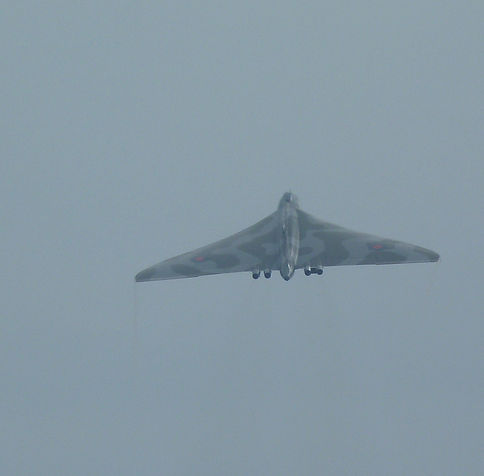
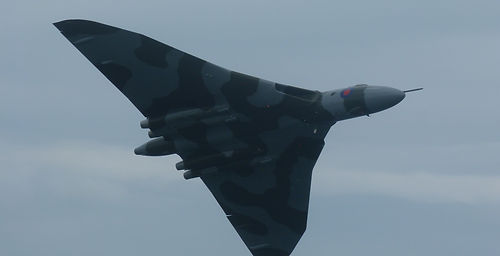
(C) Graham Collins
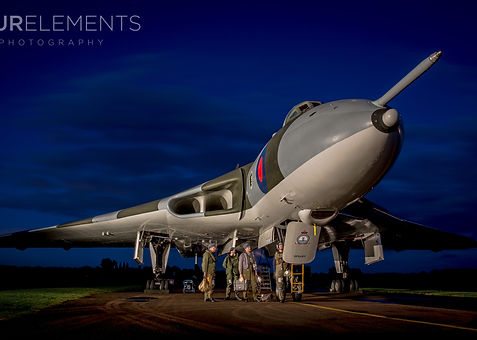

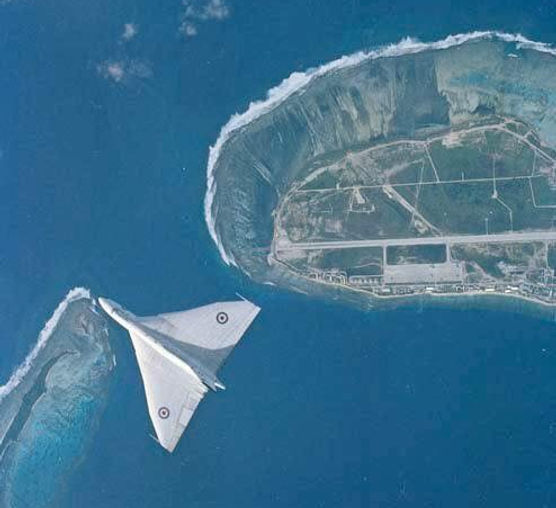
(C) Steve Jones
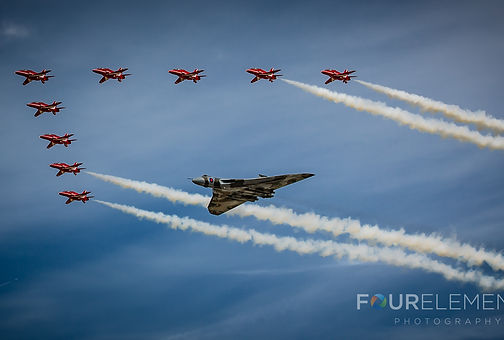

(C) Neil Atterbury/Four Elements Photography
(C) Kane Williams
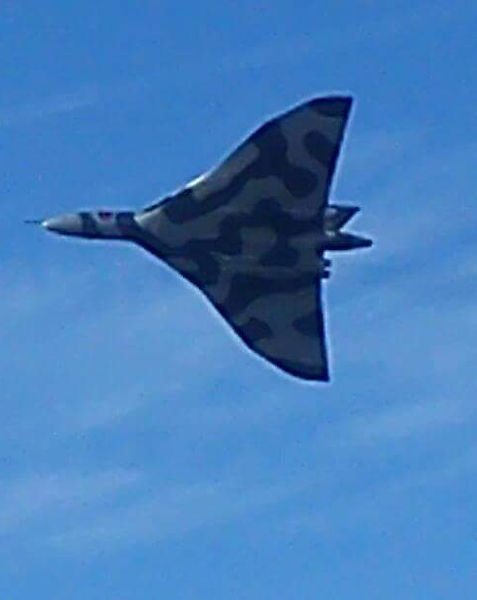
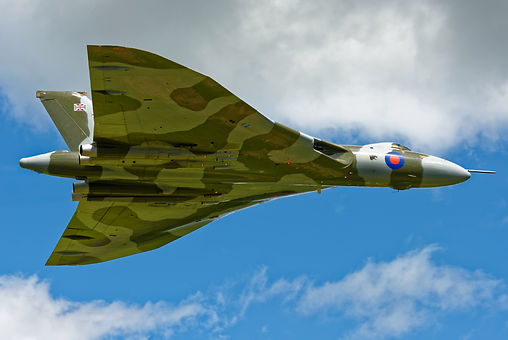
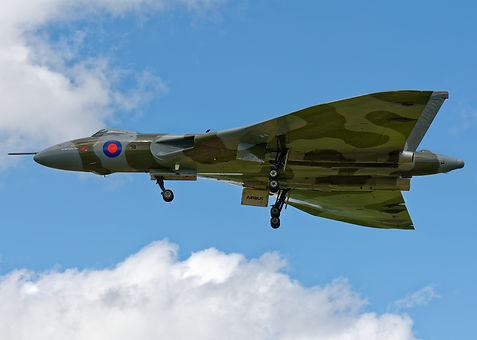
(C) Andrew Miller

Priority Section
Want your photographs to appear here next article? email us for more information : contact.lfaproductions@gmail.com
The above photographs were taken by our Head Writer, Dave Sims from Dave Sims Photography